Bitten on the Trail: A Calm Homeopathic Approach to Tick Bites


A Tiny Bite That Can Rattle the Whole Day
Emma had only planned for a peaceful Saturday hike.
The sun was warm, the trail was quiet, and her kids were running ahead collecting pinecones and asking for snacks every five minutes. By the time they got home, everyone was tired, happy, and covered in the usual outdoor evidence: dusty shoes, tangled hair, and grass stuck to socks.
But later that evening, while changing into pajamas, Emma noticed something small and dark attached to the back of her leg.
A tick.
Her stomach dropped.
The bite itself didn’t look dramatic — just a tiny raised spot with some redness around it. It wasn’t terribly painful, maybe a little itchy and irritated. But as most moms know, the worry can feel much bigger than the bite itself.
Tick bites can be easy to miss, and people may react differently. Some may notice redness, itching, swelling, tenderness, or irritation at the bite site. Others may not notice much at all at first.
For Emma, the first step was simple: remove the tick carefully, clean the area, and take a deep breath.
She also kept the tick intact and placed it in a small sealed container, just in case it needed to be identified or tested later. Depending on where you live, tick testing rules can vary, so it’s wise to check your local public health guidance
Because tick bites happen.cKnowing what to reach for matters more than spiraling about where they came from.
The Usual Route: Watch, Wait, and Sometimes Medicate
Conventionally, after a tick bite, most people are told to clean the area, monitor the bite, and watch for any symptoms that may develop. In some cases, especially depending on the region, the type of tick, how long it was attached, or the person’s symptoms, a doctor may recommend antibiotics.
Antibiotics can be necessary in certain situations, and this is something to discuss with a qualified healthcare provider. But many families also know that antibiotics can come with downsides, such as digestive upset, nausea, diarrhea, yeast issues, and disruption to the gut.
This is one reason many parents want to know what they can do right away to support the body naturally. That is where homeopathy often becomes part of the family toolkit.
The Remedy to Know: Ledum for Tick Bites
Once Emma removed the tick and cleaned the area, she reached for one of the classic homeopathic remedies for bites and puncture wounds:
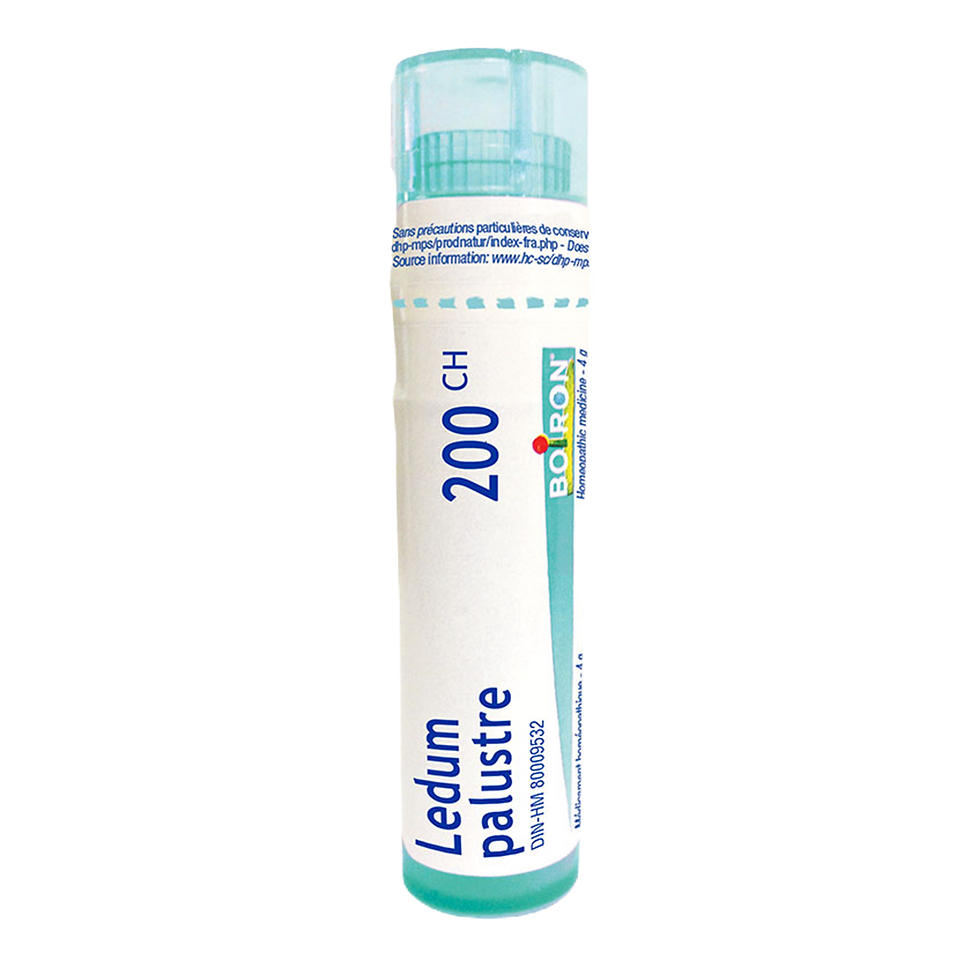
Ledum.
Ledum is one of the first remedies to think of for a tick bite because a tick bite is a puncture wound. In homeopathy, Ledum is commonly used for punctures, bites, stings, and wounds where something has pierced the skin.
But a common question is:
“Is Ledum just for soothing the wound, or does it help the body respond to the bite itself?”
The answer is: in homeopathy, we think of Ledum as doing both.
It is used to support healing at the site of the puncture, but homeopathy is not only about calming the skin. The deeper goal is to stimulate the body’s own healing and defense response.
We do not always know exactly what the body is dealing with after a bite. That is part of why people feel nervous about ticks. But in homeopathy, we choose the remedy based on the type of injury and the picture in front of us.
For tick bites, Ledum is the remedy we reach for because the body has experienced a puncture-type bite. The intention is to support the body in responding well to that event — not in an overactive, panicked way, but in an intelligent, balanced way.
That is why Ledum is often used prophylactically after bites and puncture wounds.
How to Take Ledum After a Tick Bite
For tick bites, the suggested remedy plan is:
Ledum 200C
Every 3 hours on day 1
Then twice daily for 1 week
Then every 3 days for 1 month
Then every 7 days for 1 month
For Emma, having a clear plan helped her move from panic into calm action.
Instead of staring at the bite every ten minutes and Googling herself into a spiral, she could support the body, observe carefully, and stay grounded.
A simple home rhythm might look like this:
Remove the tick carefully.
Placed it in a small sealed container, just in case it needed to be identified or tested later.
Clean the area.
Take a photo of the bite.
Write down the date.
Begin the Ledum protocol.
Keep an eye on how the person is feeling.
This is the beauty of having remedies on hand. Homeopathy gives parents something practical to do in those moments where fear wants to take over.
Prepared, Not Panicked
Tick bites can feel scary, especially when everyone online is talking about them. But fear does not have to lead the way.
A calm plan matters.
Ledum is a helpful remedy to know because tick bites are puncture wounds, and Ledum is one of the key remedies for that kind of injury. It supports the body’s natural healing response and is commonly used after bites, stings, and punctures.
As always, this article is for educational purposes and is not a substitute for medical care. If you are concerned after a tick bite or symptoms develop, please speak with a qualified healthcare provider.
If you’re curious to learn more about how homeopathy can support you, your friends, family, and even your pets, we invite you to subscribe to our mailing list. You can also follow us on Facebook and Instagram for daily tips, stories, and community connection.
~ Lisa Heinrichs PHom M
The Author disclaims all liability for any loss or risk, personal or otherwise incurred as a consequence of use of any material in this article. This information is not a substitute for professional medical advice, diagnosis or treatment.

Is there a preventative protocol with Ledum for use in tick season/regions?
How do you recommend cleaning the wound site?